sciencegcse← B3 lessons

Biology Paper 1 · B3 · Lesson 3.1

Pathogens and how they spread

What causes infectious disease, and how can we stop it spreading?

Key ideas1 of 3

What is a pathogen?

A pathogen causes infectious disease. The four groups to recognise are bacteria, viruses, fungi and protists. They can infect animals or plants. Many microorganisms are harmless or useful.
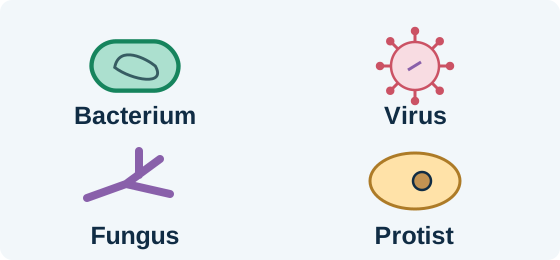
Examples of a bacterium, virus, fungal hyphae and a protist. Not to scale.

Simplified examples, not drawn to the same scale.

Next: Viral diseases: measles and HIV →
Topic resources and sources

Daily 5 · Exam practice · Download the A4 revision sheet

Core content is shared by Foundation and Higher Tier. Challenge questions ask you to explain and apply it.

AQA Combined Science Trilogy specification · 4.3.1.1. Notes, questions and diagrams are original teaching material.

Rose leaf: LiquidGhoul / Wikimedia Commons, public domain. Mosquito: CDC / Jim Gathany, PHIL 5814, public domain. This photograph shows a vector species; it does not establish that this individual carries malaria.