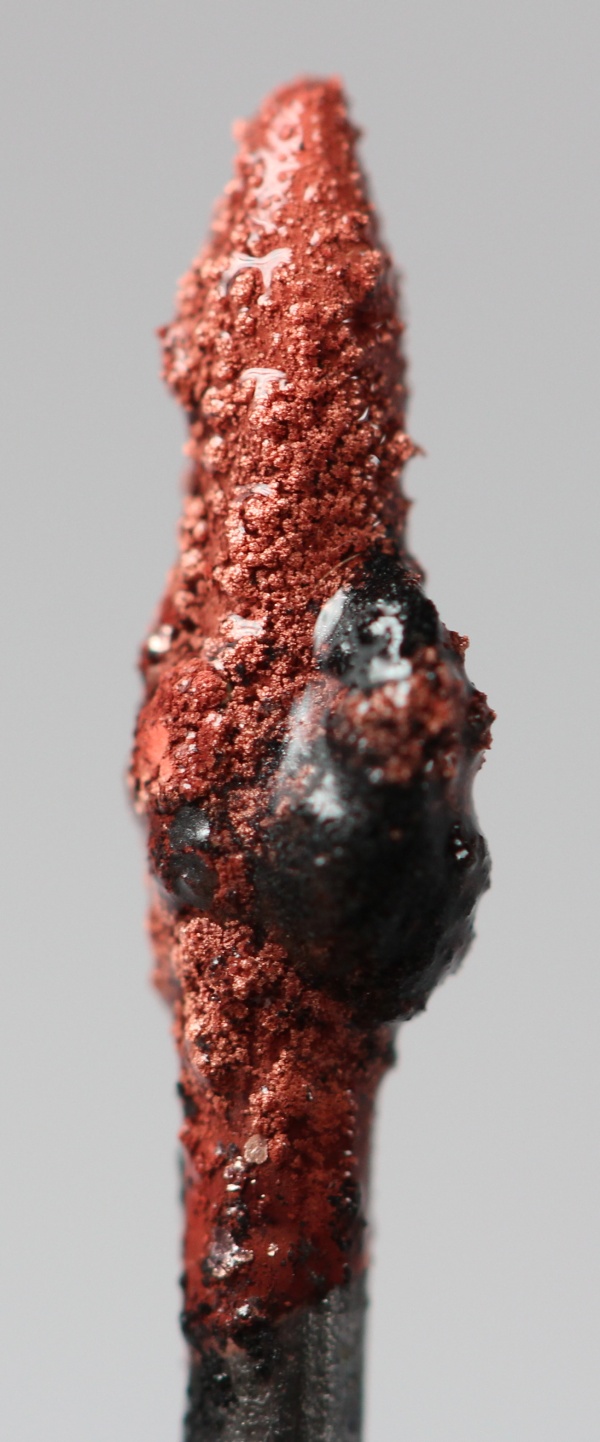
Set up and observe
Place two separated graphite electrodes in the solution and connect to a low-voltage d.c. supply. Mark positive and negative. Switch on, watch each electrode and record gas bubbles, deposits and colours. Switch off before changing the solution. The electrodes must not touch. Wear eye protection; use small quantities and the teacher’s ventilation arrangements for chlorine. Never smell it directly.
Identify the products
| Product | Test or observation |
|---|
| Copper | Reddish-brown solid coating |
| Hydrogen | Lit splint gives a squeaky pop |
| Oxygen | Glowing splint relights |
| Chlorine | Bleaches damp blue litmus paper white; it may turn red first |
Test collected gases as directed by the teacher; keep flame tests away from the working cell. For comparisons, control voltage, solution volume and concentration, electrode material, immersion depth, separation and time. Repeat to check consistency.