Balance atoms, not molecules
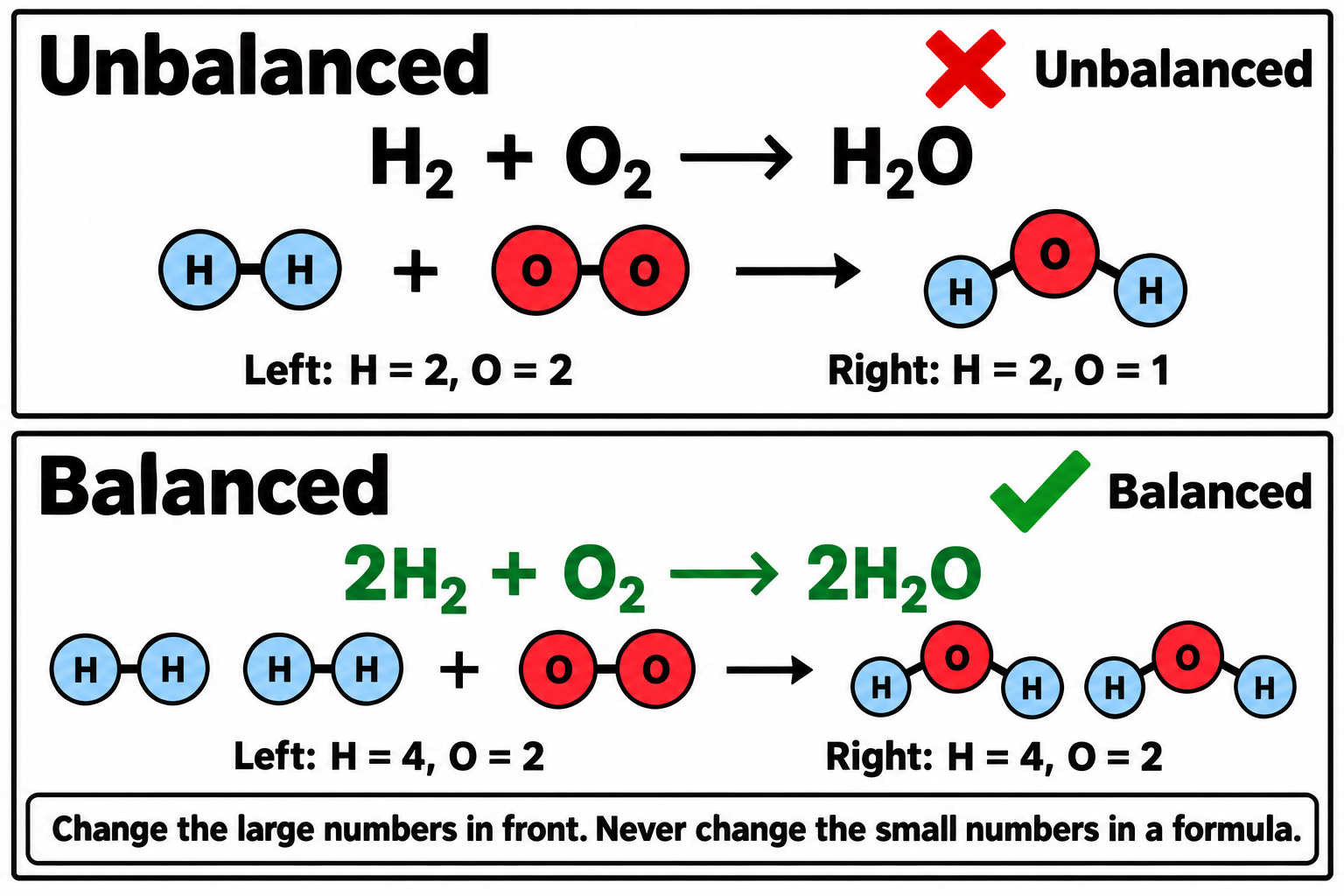
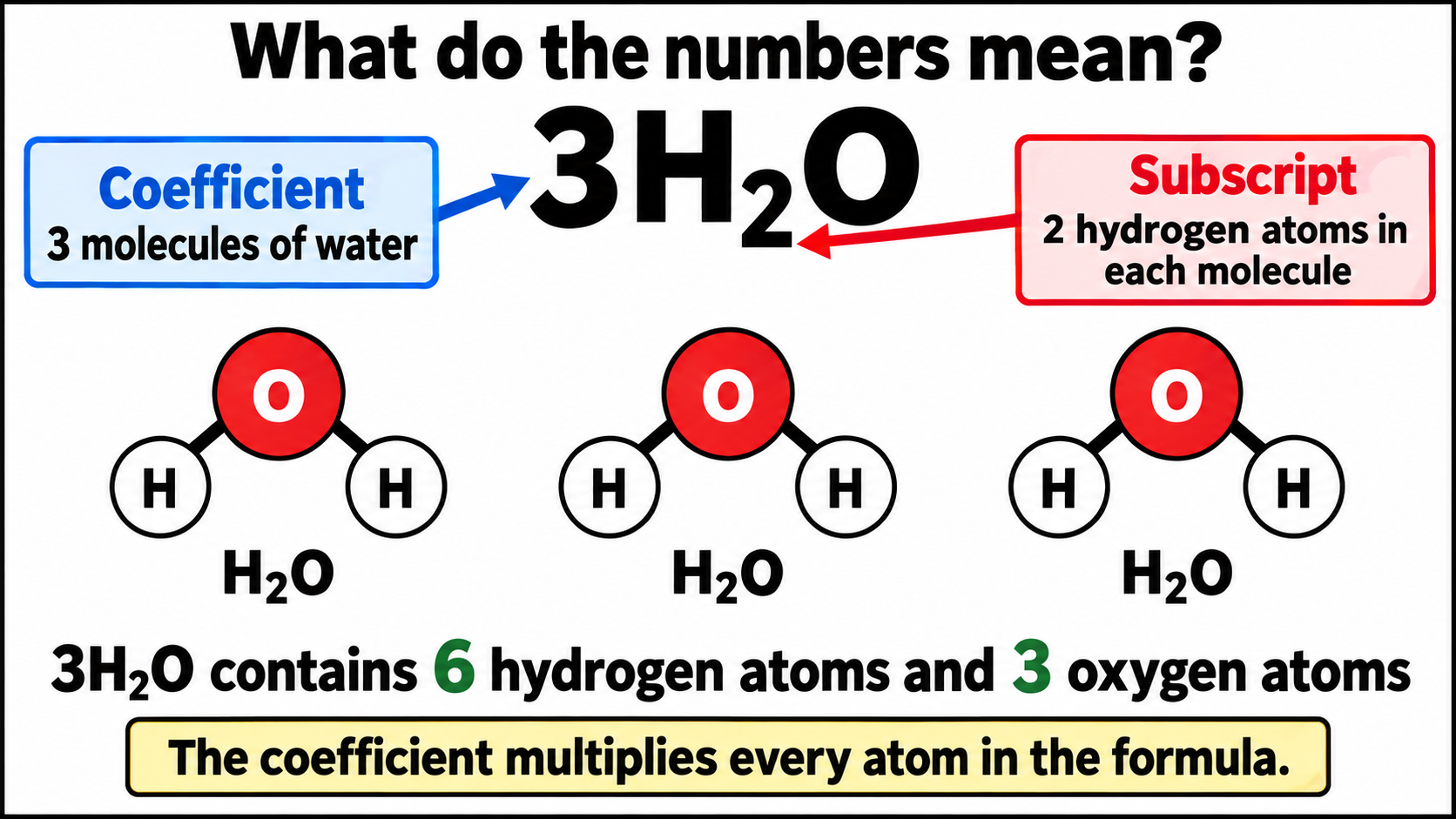
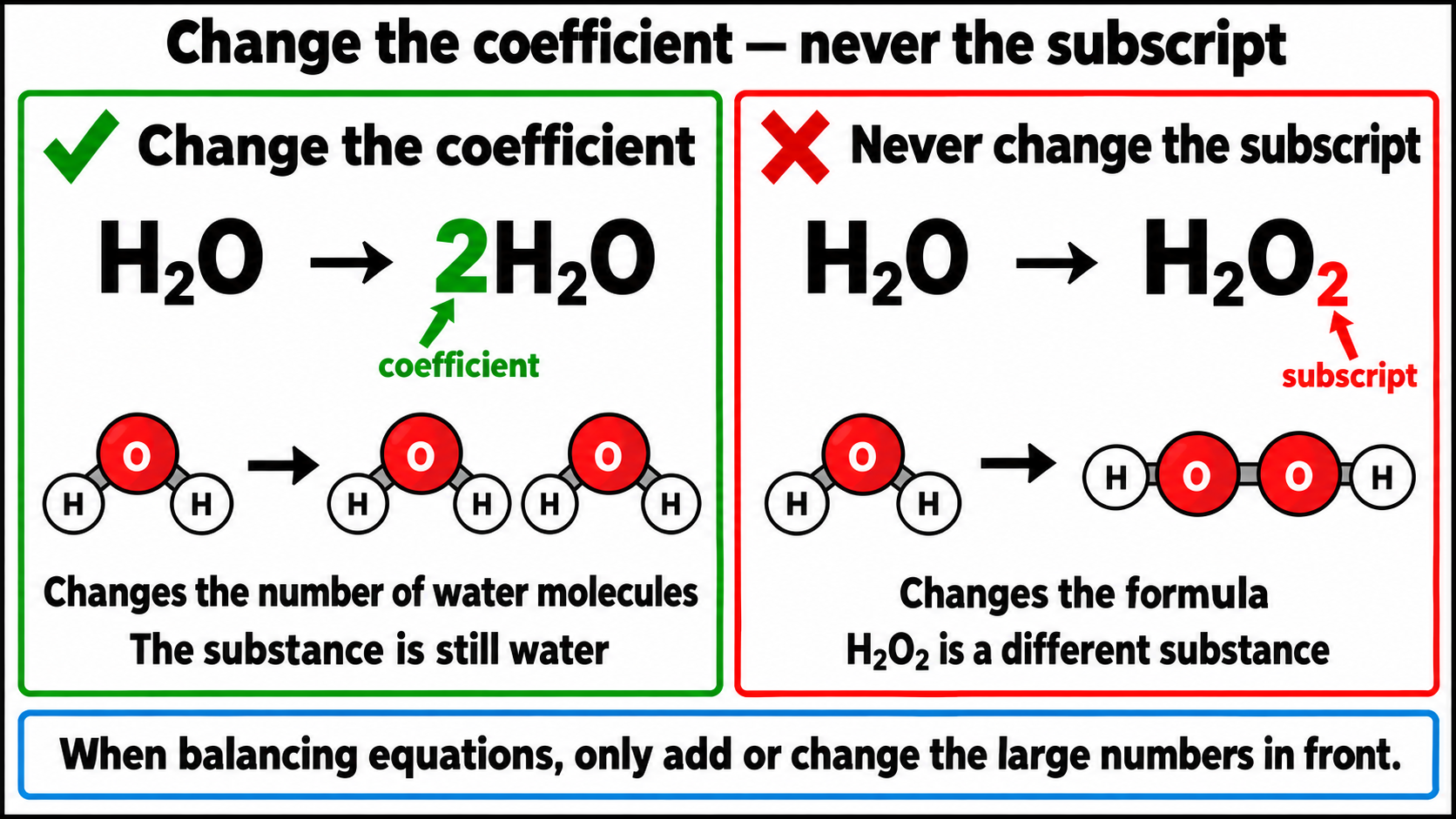
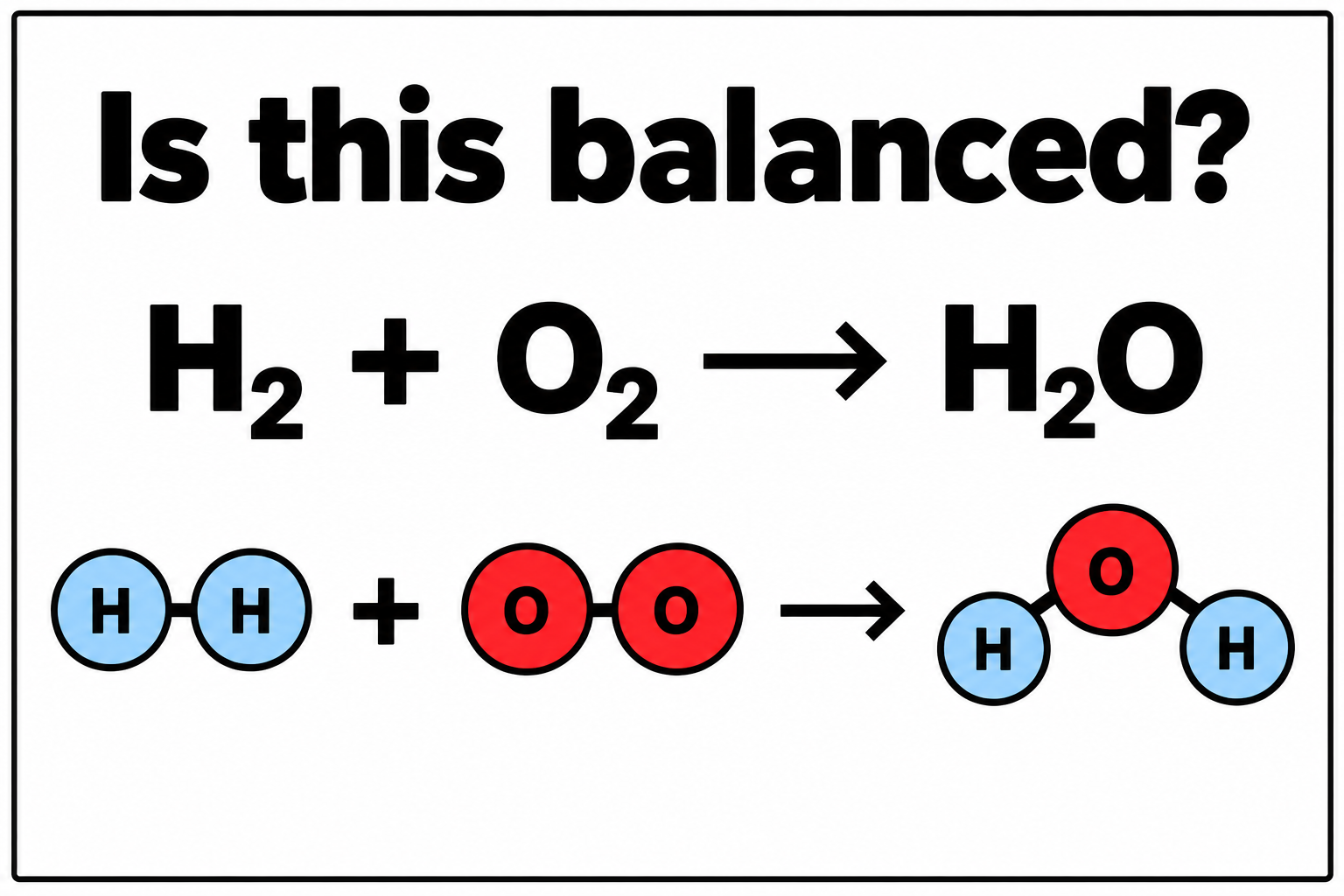
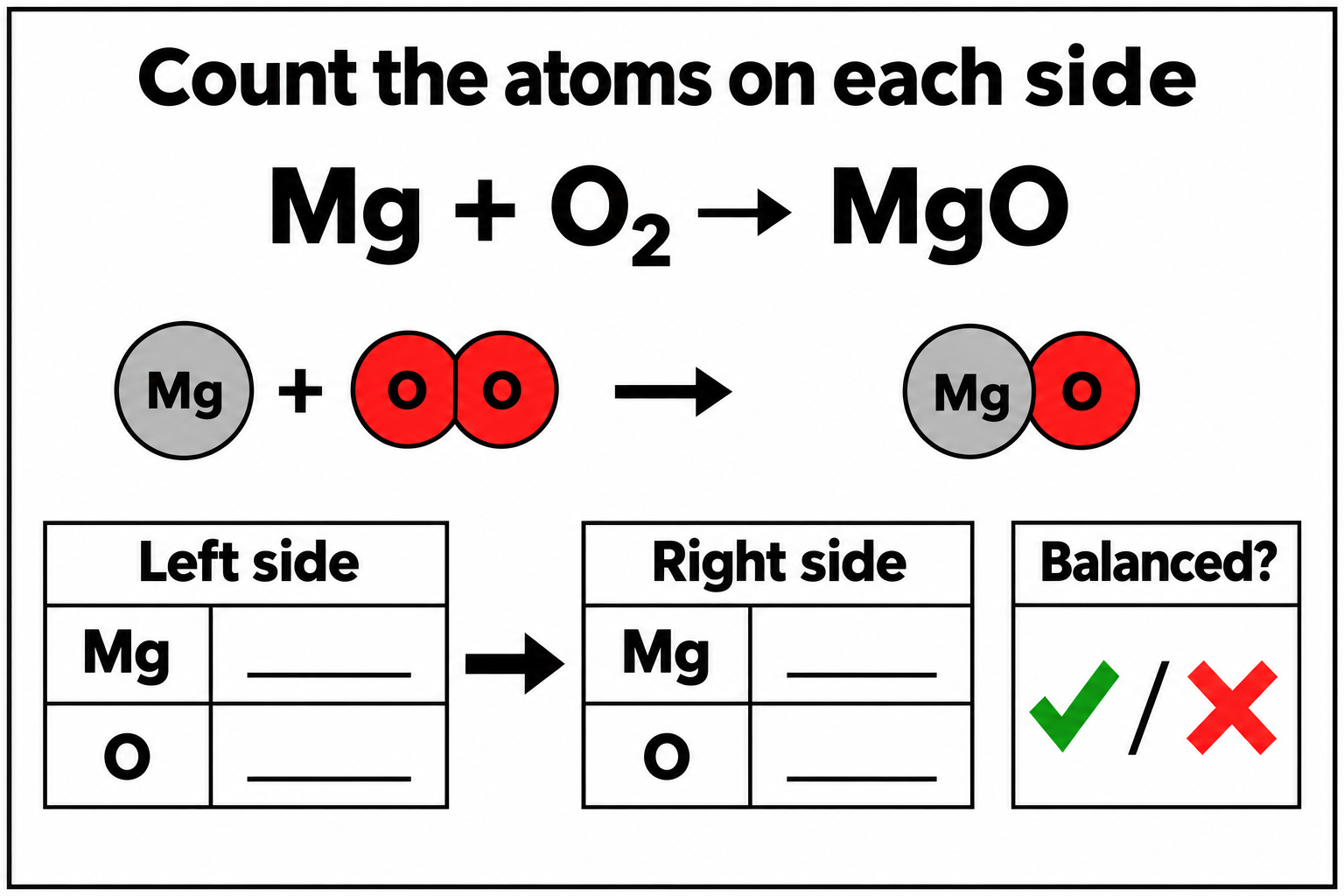
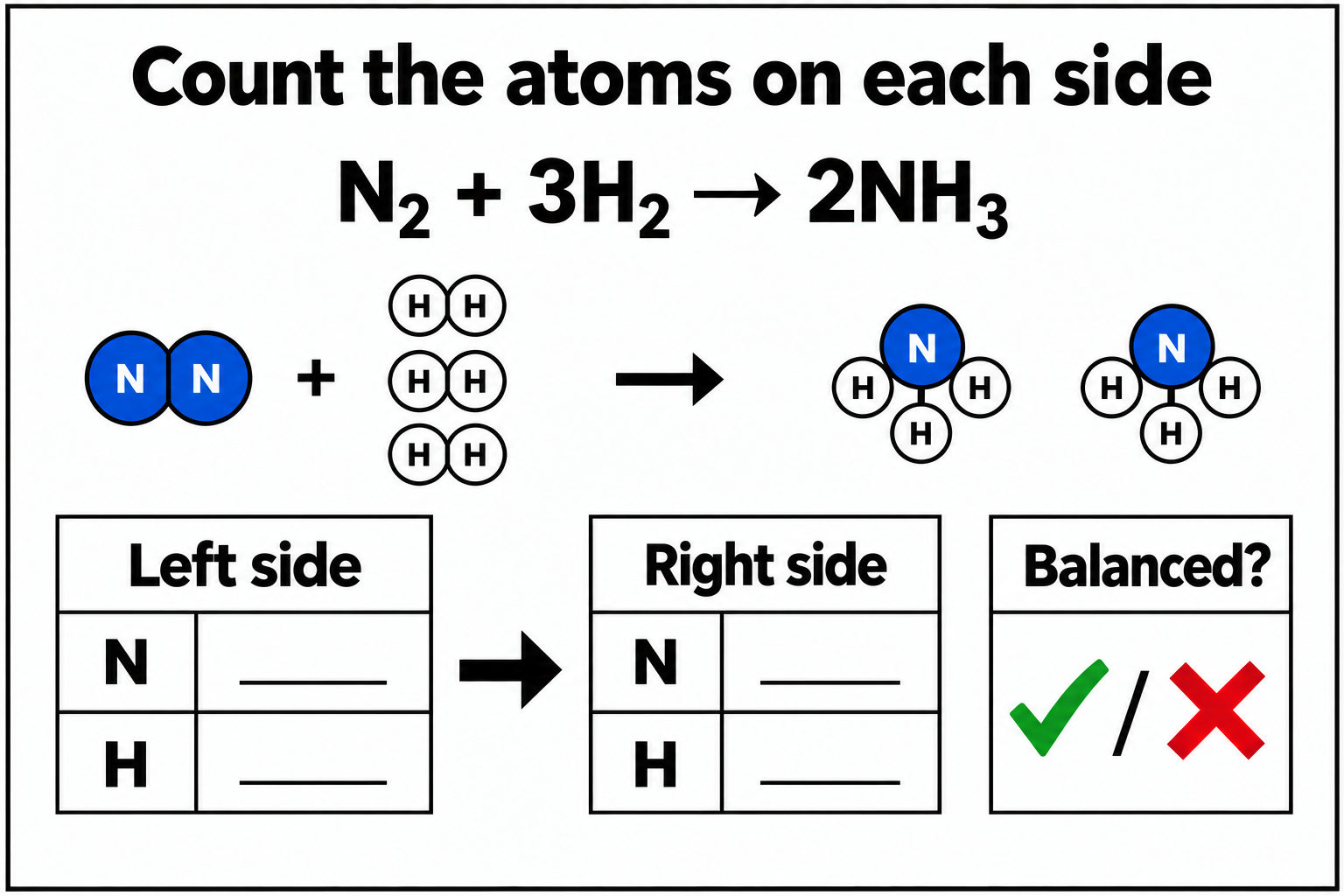
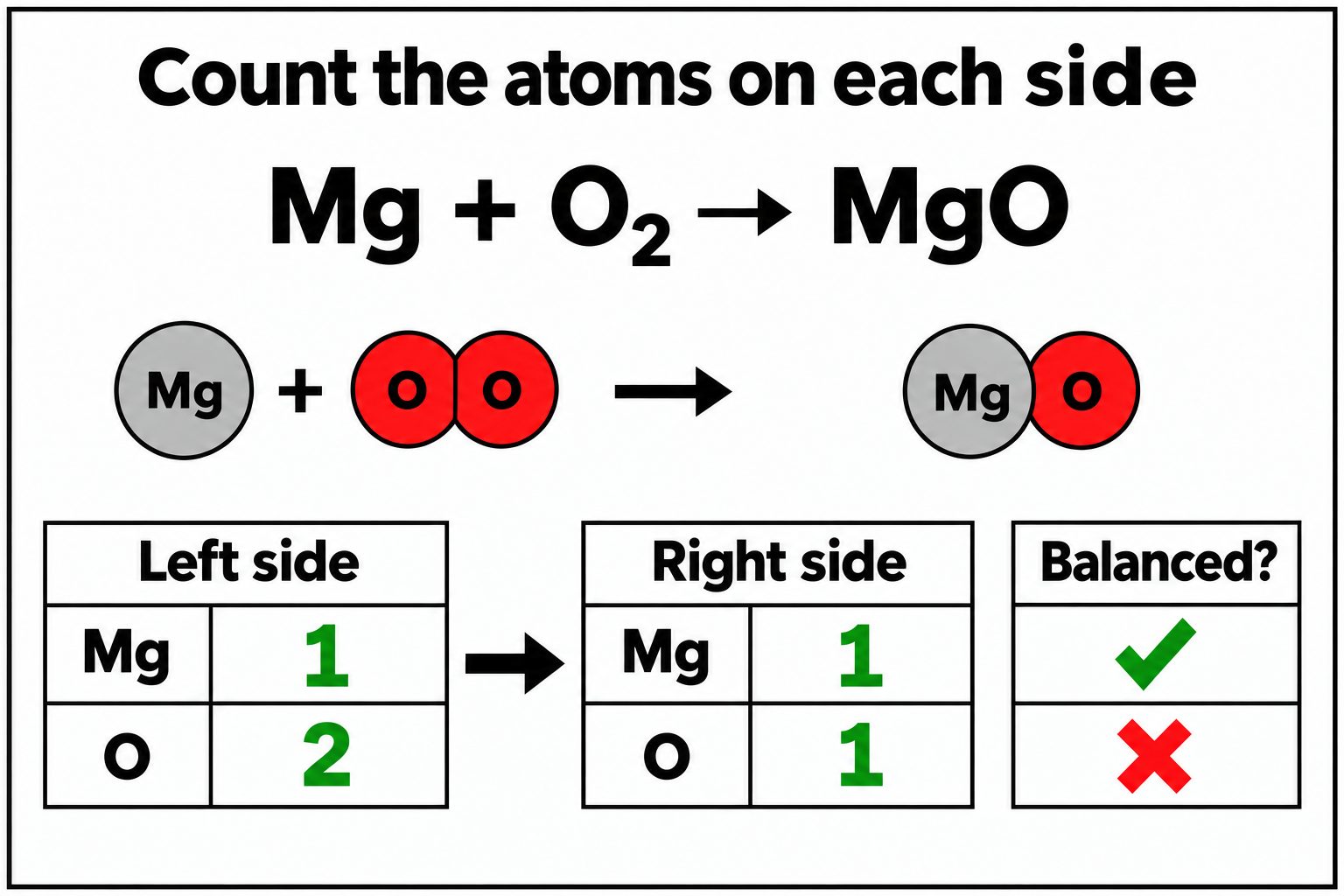
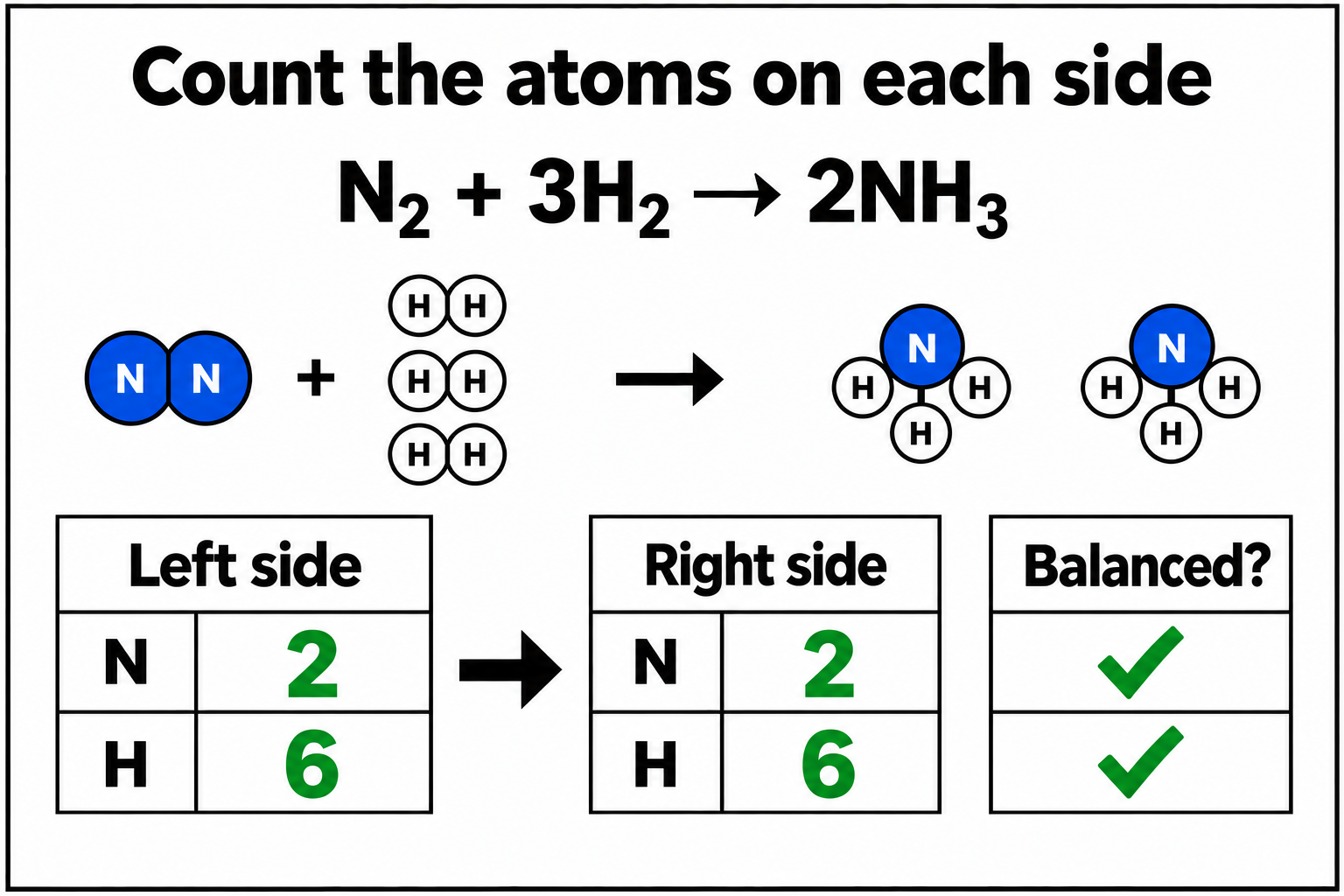
A balanced equation has the same number of each kind of atom on both sides. Change only the front coefficients. Changing H₂O to H₂O₂ makes a different substance. Use the smallest whole-number coefficients.
A balanced equation has the same number of each kind of atom on both sides. Change only the front coefficients. Changing H₂O to H₂O₂ makes a different substance. Use the smallest whole-number coefficients.
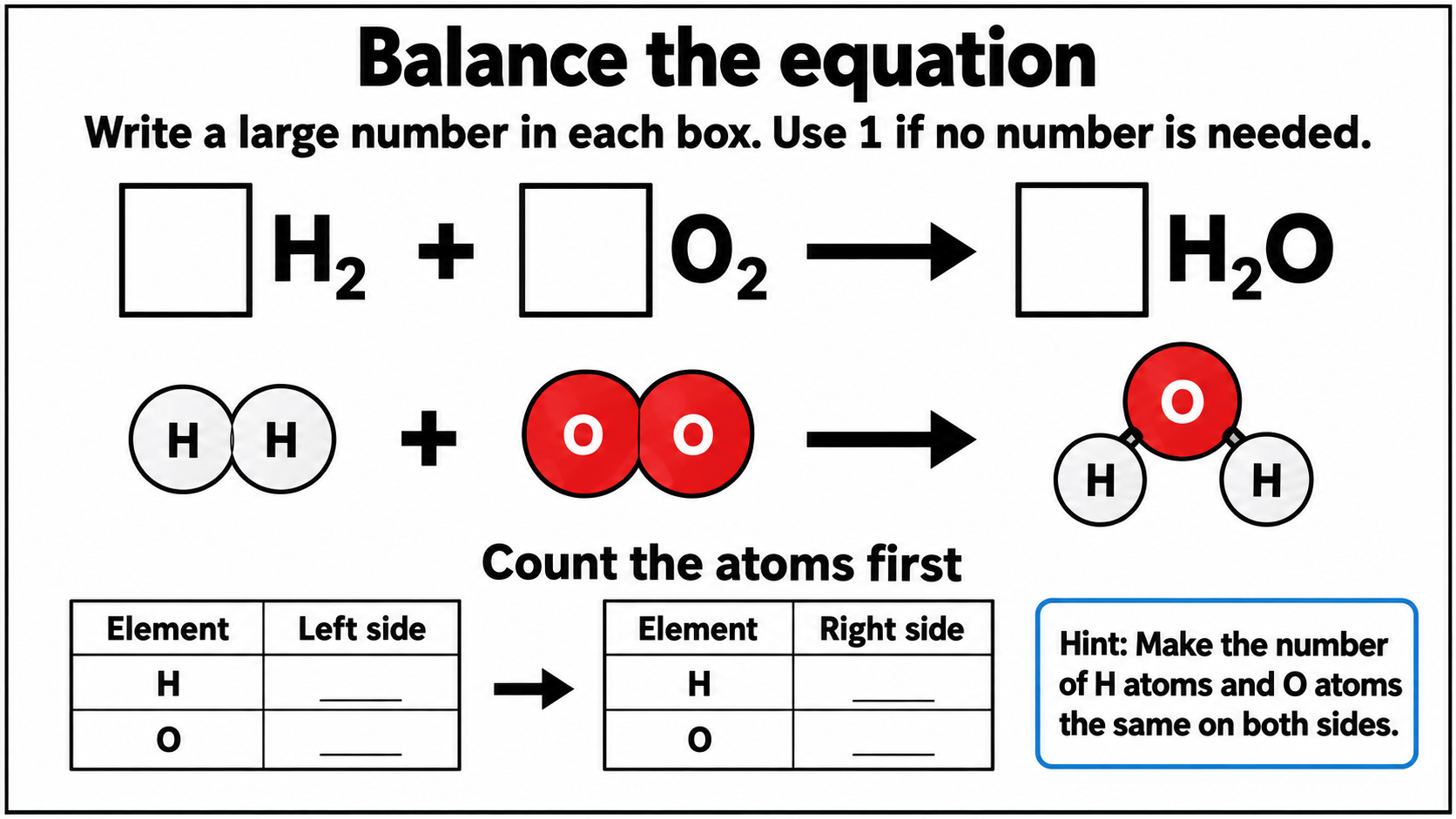
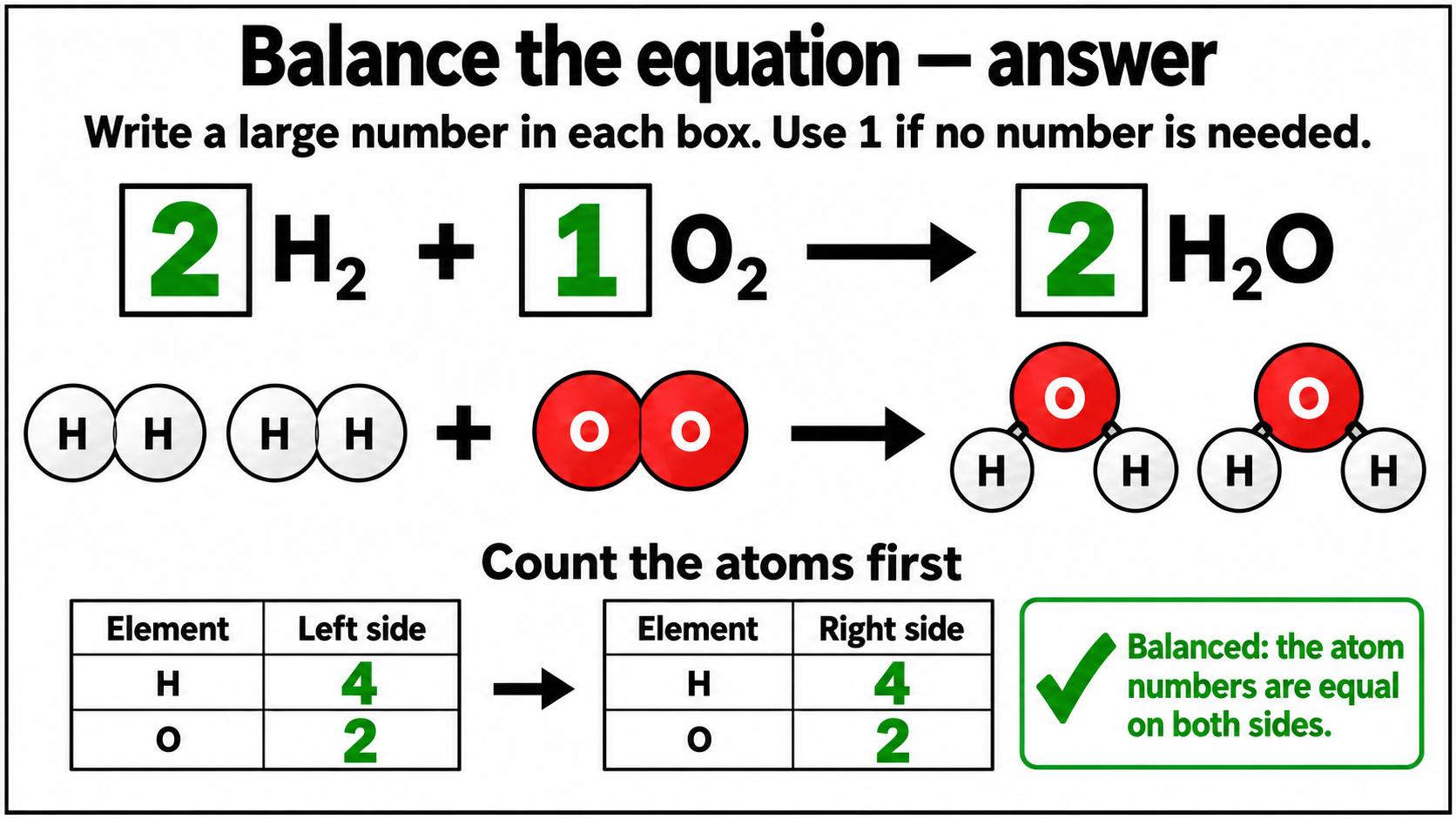
H₂ + O₂ → H₂O
1. Put 2 before H₂O to balance oxygen.
2. This makes 4 hydrogens on the right, so put 2 before H₂.
2H₂ + O₂ → 2H₂O
Check: H = 4 each side; O = 2 each side.
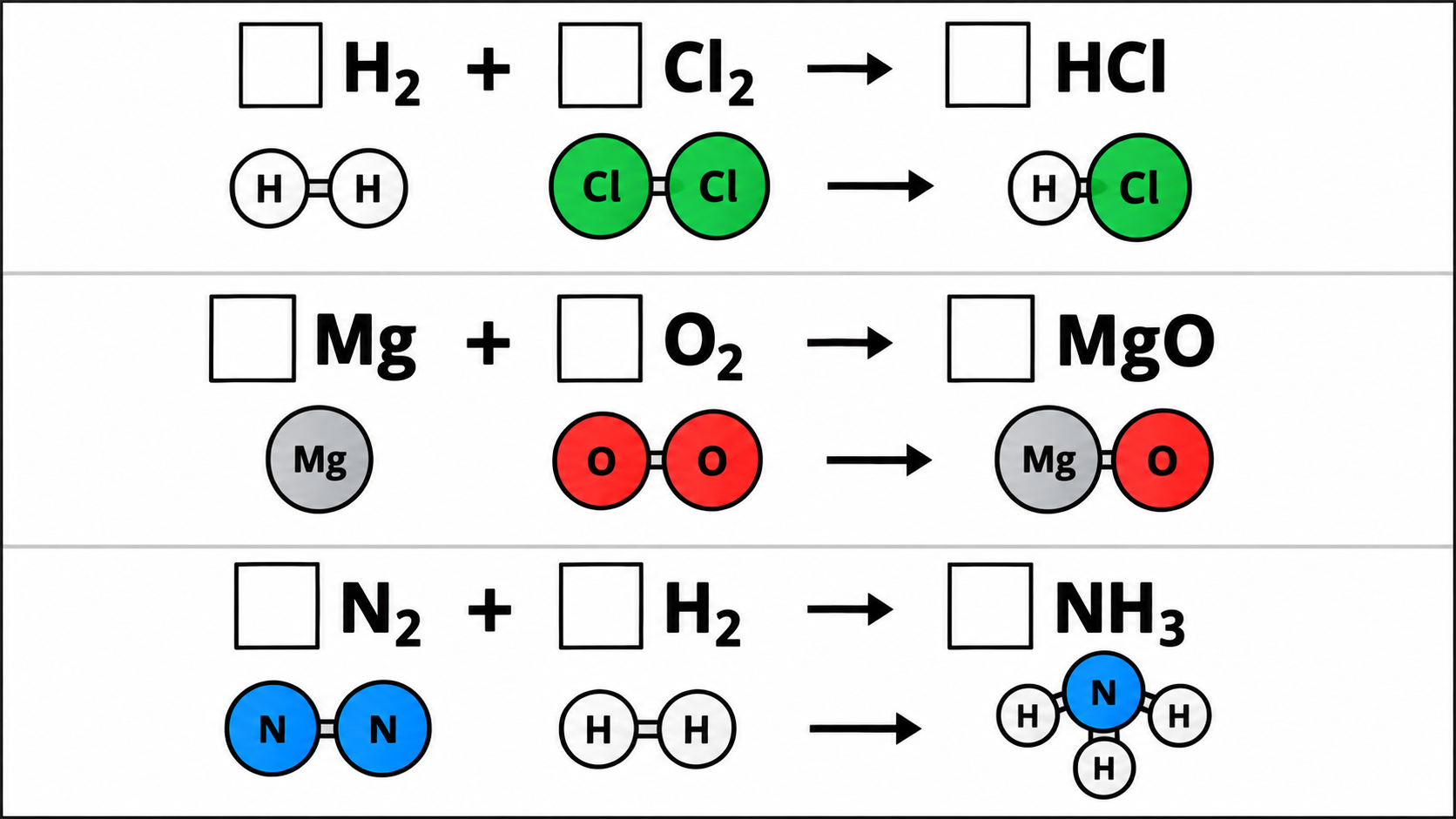
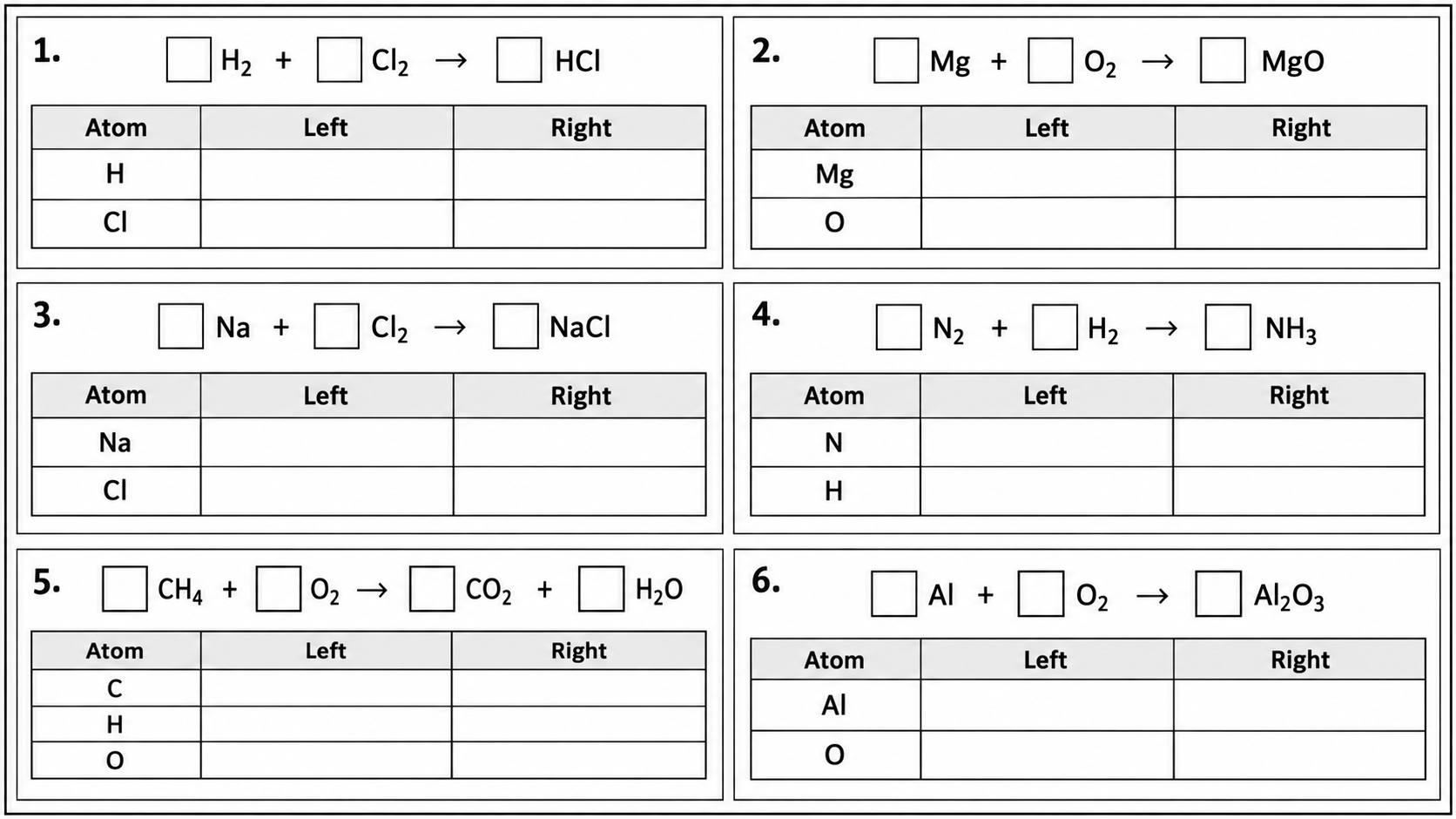
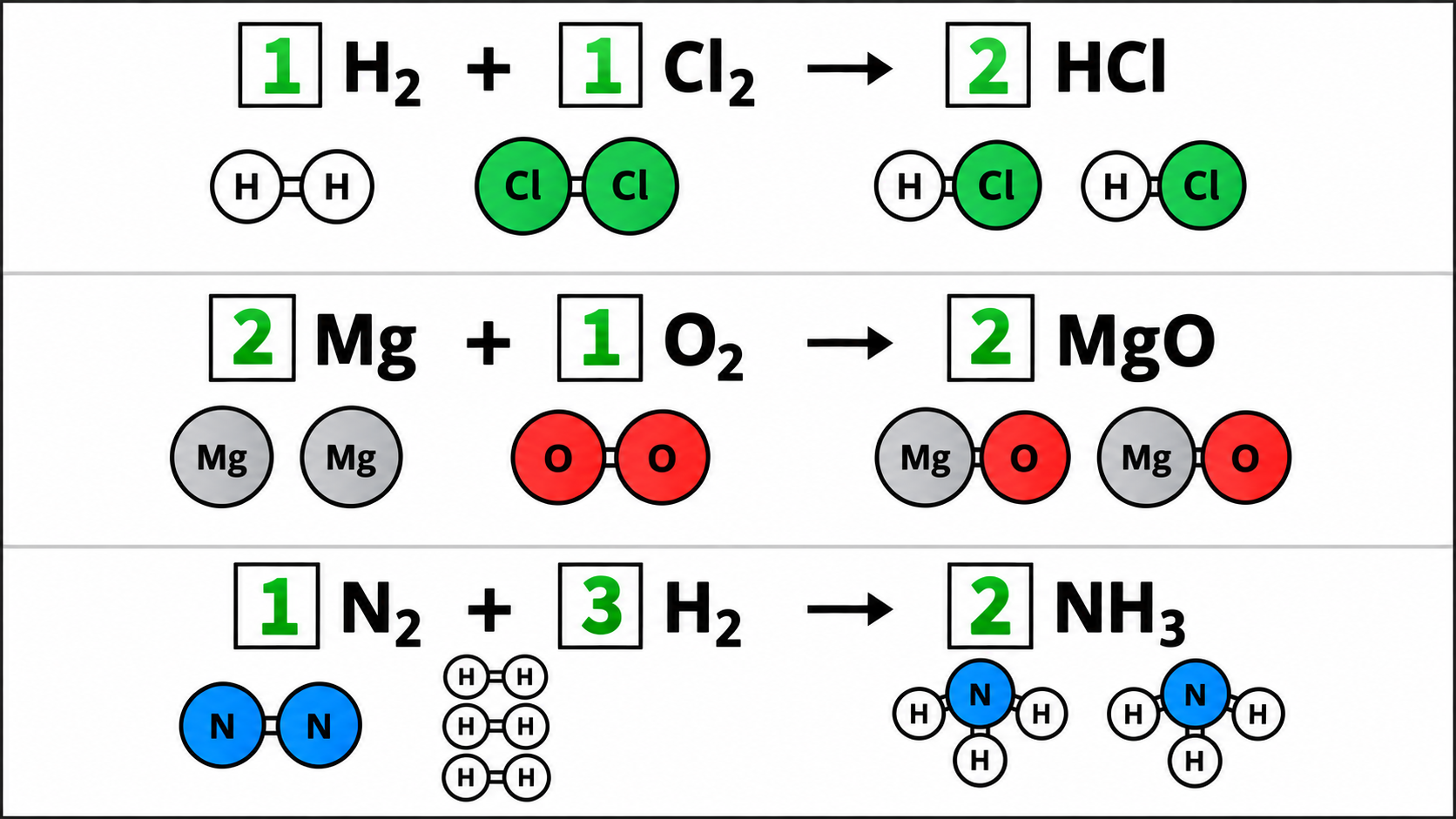
Change the front numbers and compare the atom counts. Start with water, then try magnesium oxide, aluminium oxide and methane.
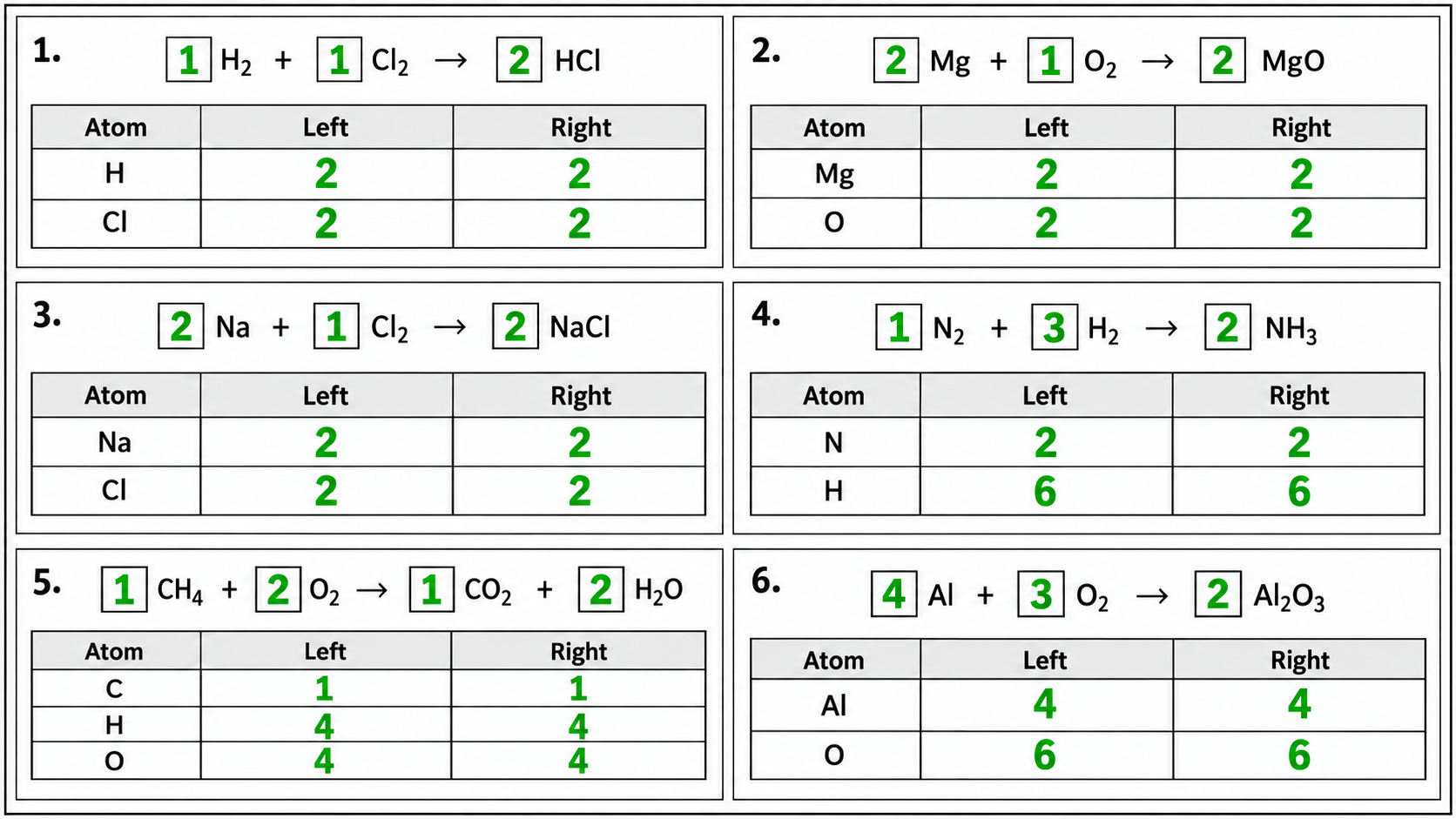
For Al + O₂ → Al₂O₃, use six oxygen atoms on each side: 4Al + 3O₂ → 2Al₂O₃. Then check aluminium. A helpful strategy is to balance elements in one compound first and leave H and O until later when several compounds contain them.
CH₄ + 2O₂ → CO₂ + 2H₂O
Carbon: 1 each side. Hydrogen: 4 each side. Oxygen: 4 each side. The coefficients give numbers of molecules or formula units, not gram ratios.
Change coefficients, never formula subscripts. Check every element and reduce to the smallest whole-number ratio.
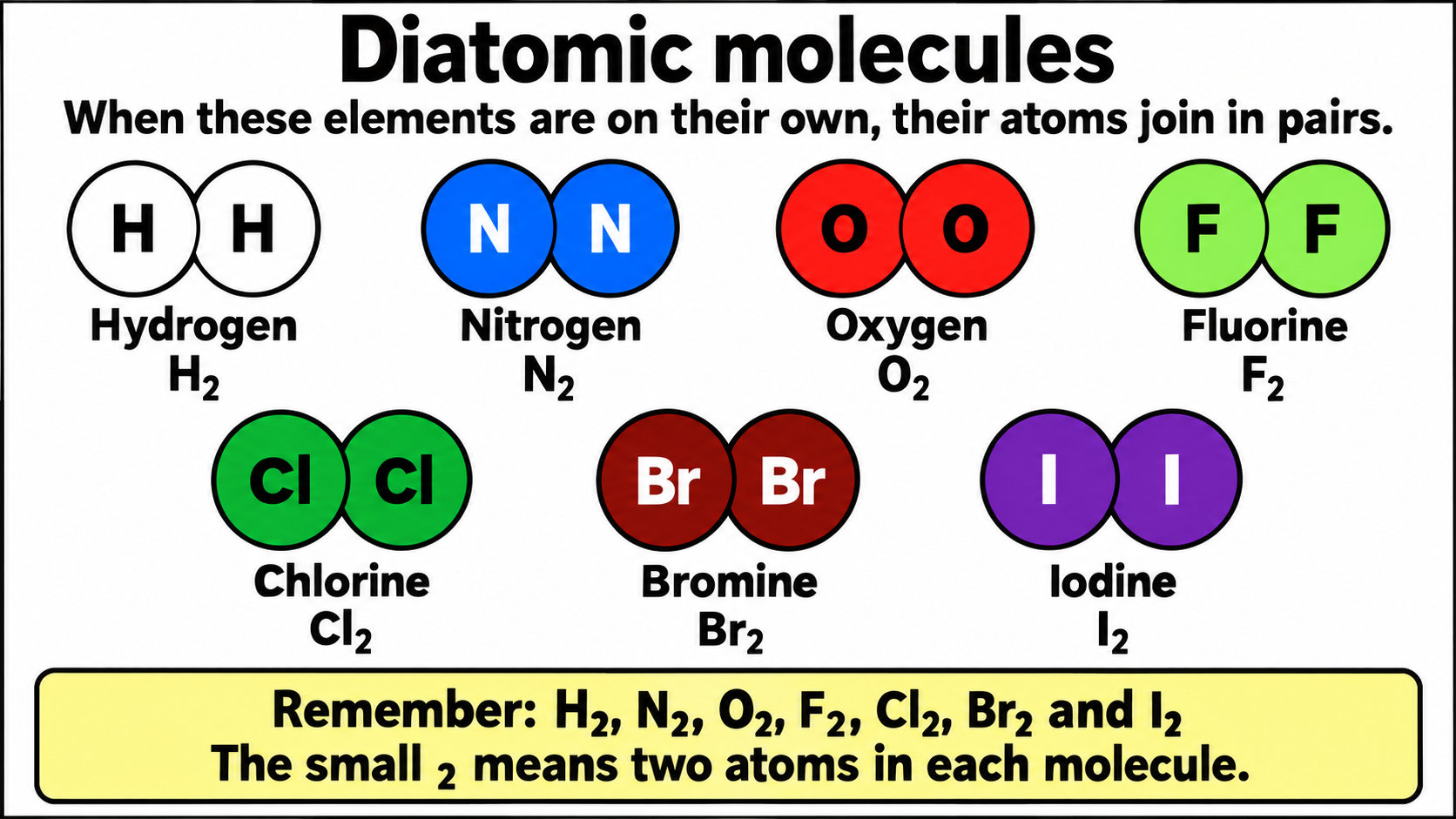
Review the rules for balancing, diatomic molecules, coefficients and subscripts.
Try each question before opening the answers.
Start with one supported problem, then use the three-question and six-question sheets.
Build confidence with pictures, clues and instant feedback.
One point for each answer you get right first time.
No timer. Take your time and use a clue whenever you need one.